
Body Temprature Screening
Body Temperature Screening: A Complete Buyer’s Guide
Mar
Body temperature screening has become a common safety step in many workplaces, public venues, and healthcare settings. Whether used during health alerts or as a routine precaution, the right body temperature scanner can help organizations monitor entry points and reduce risks.
This guide explains how temperature screening systems work, the types available, key features to compare, and how to choose a solution that fits your environment. It also covers use cases, compliance factors, and practical buying tips so you can make a well-informed decision.
Why Temperature Screening Still Matters
Temperature checks are not only for emergency health events. Many organizations now use them as part of broader workplace safety plans. They help identify people with elevated temperature before they enter shared spaces, which supports prevention policies.
In offices, factories, schools, and transport hubs, screening is often part of larger public safety technology systems that include access control and visitor management. While temperature alone cannot diagnose illness, it can signal when further checks may be needed.
How Body Temperature Screening Technology Works
Most systems measure skin temperature using infrared sensors. These sensors detect heat emitted from the forehead or face without physical contact. The reading is then compared with a preset threshold to flag high temperatures.
There are three main steps in the process:
- Detection: The sensor captures thermal data.
- Analysis: Software calculates approximate body temperature.
- Alert: A visual or audio signal indicates normal or elevated readings.
Accuracy depends on calibration, environmental conditions, and proper placement. Controlled indoor settings usually produce more reliable results than outdoor entrances.
Types of Temperature Screening Systems
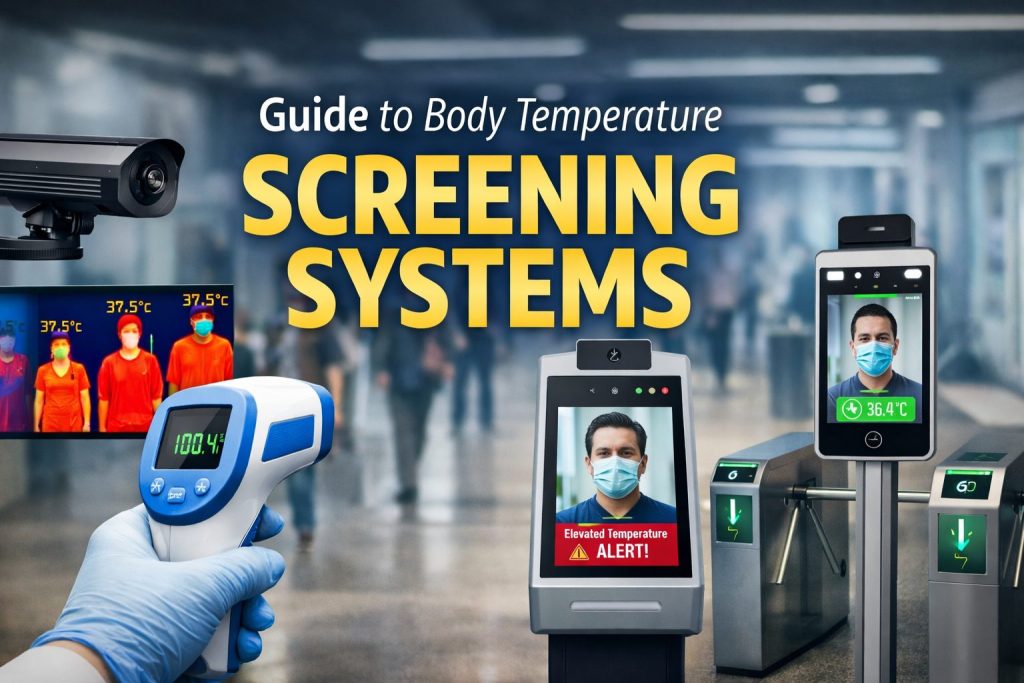
1. Handheld Infrared Thermometers
These are portable and low-cost tools suitable for small offices or temporary setups. They require an operator and work best where traffic is limited.
2. Thermal Imaging Cameras
These systems scan multiple people at once and are common in airports, hospitals, and large facilities. They offer better monitoring for high-traffic areas.
3. Automated Screening Kiosks
Often seen as fever detection kiosks, these combine sensors, displays, and alerts in one unit. They can integrate with access gates to allow or deny entry.
4. Integrated Access Control Systems
Some advanced setups combine temperature checks with ID verification or facial recognition, forming part of a wider public safety technology infrastructure.
Key Features to Compare Before Buying
Choosing the right equipment depends on your environment, budget, and compliance needs. Here are the main factors to review:
Accuracy and Calibration
Look for systems with medical-grade sensors or certified accuracy ranges. Regular calibration support is important for consistent readings.
Speed of Screening
High-traffic locations need systems that can scan multiple people without causing queues.
Contactless Operation
Non-contact devices improve hygiene and reduce the need for staff involvement.
Alerts and Data Reporting
Some systems store logs, generate reports, or send alerts when high temperatures are detected. This can help with audits and safety monitoring.
Integration Capabilities
If you already use security or attendance systems, check whether the temperature solution can connect with them.
Comparing Models: Basic vs Advanced
| Feature | Basic Devices | Advanced Systems |
|---|---|---|
| Screening speed | Manual, slower | Automated, fast |
| Data tracking | Limited or none | Detailed logs |
| Integration | Standalone | Works with access control |
| Best for | Small offices | Airports, factories, campuses |
Basic tools are affordable and simple, while advanced systems provide automation and analytics. The choice depends on scale and operational needs.
Common Use Cases Across Industries
- Corporate Offices: Screening at entry points helps maintain workplace safety policies and reassures employees.
- Healthcare Facilities: Hospitals use high-accuracy thermal systems to monitor visitors and staff continuously.
- Manufacturing and Warehousing: Large workforces benefit from automated systems that screen quickly during shift changes.
- Retail and Public Venues: Shopping centers and event venues often install fever detection kiosks to manage crowd flow while maintaining safety checks.
Health and Compliance Considerations
Temperature screening should always be part of a broader health policy. Organizations should:
- Inform visitors and staff about screening procedures
- Follow local privacy and data protection rules
- Maintain equipment calibration records
- Train staff on correct usage
Some regions also require signage explaining the purpose of screening and how data is handled. When integrated into wider safety systems, it is important to ensure secure storage and limited access to personal information.
Costs and Budget Planning
Prices vary widely depending on technology and scale.
- Handheld devices: Low cost, minimal setup
- Kiosks and mid-range cameras: Moderate investment
- Enterprise thermal systems: Higher upfront cost but more automation
Consider not only the purchase price but also installation, maintenance, and software licensing. Long-term reliability often makes higher-quality systems more cost-effective.
Tips for Choosing the Right Solution
- Assess traffic volume: Choose a system that can handle peak entry times.
- Check environment conditions: Indoor, stable lighting improves accuracy.
- Define your goal: Monitoring, compliance, or automation.
- Request demonstrations: Real-world testing helps compare performance.
- Maintenance plan: Regular checks keep readings reliable.
Selecting the right body temperature scanner is about matching features to real operational needs rather than simply choosing the most advanced option.
Future Trends in Temperature Screening
Temperature screening technology continues to evolve. New systems focus on improved accuracy, faster processing, and better integration with building management tools.
We are also seeing more multi-function devices that combine temperature checks with air quality monitoring and occupancy tracking. As part of broader safety ecosystems, these tools help organizations manage health and safety more efficiently.
Conclusion
Body temperature screening remains a practical tool for managing entry safety in many environments. From handheld thermometers to fully automated kiosks, the market offers solutions for every scale and budget.
By comparing features, understanding compliance needs, and aligning the technology with your operational goals, you can select a system that supports both safety and efficiency. A well-chosen body temperature scanner not only helps monitor health indicators but also builds confidence among employees, visitors, and customers.
Frequently Asked Questions (FAQs)
How accurate are temperature screening systems?
Accuracy depends on sensor quality, calibration, and environment. Medical-grade devices and controlled indoor setups generally provide the most reliable readings.
Can temperature screening detect illness?
No. It only identifies elevated temperature, which may indicate a fever. Further medical evaluation is required for diagnosis.
Where should screening equipment be installed?
Install systems indoors, away from direct sunlight, wind, or heat sources to improve measurement accuracy.
Are automated kiosks better than handheld devices?
Kiosks are better for high-traffic areas because they work faster and require less staff involvement. Handheld tools are suitable for smaller locations.
Do temperature screening systems store personal data?
Some advanced models store logs. Organizations should follow local privacy rules and clearly inform users if data is recorded.
